

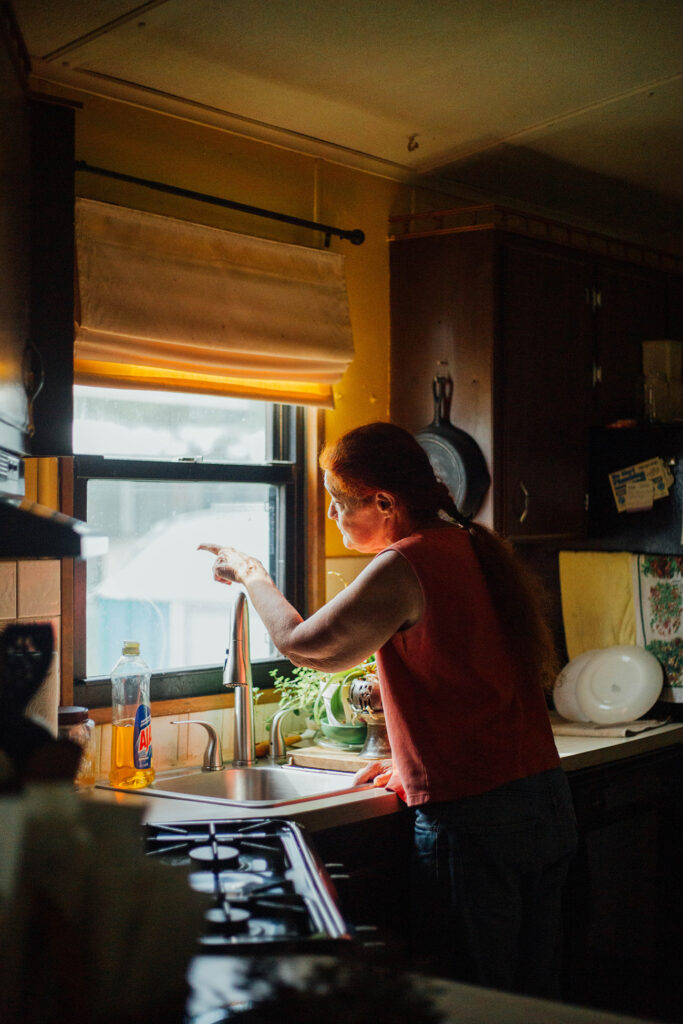

SUSAN’S STORY
Susan T. lives alone in Manhattan, Kansas.
“My husband died… That’s when I lost my job. My supervisor refused to give me my last week of earned time off, and my husband was dying. It couldn’t be helped,” Susan shared with us. “And then I was a 62-year-old office manager. People didn’t hire 62-year-old office managers.”
Despite 30+ years of work experience, Susan has still struggled to find new employment in those three years since. Amid a rising cost of living and newly widowed, Susan was forced to turn to an increasingly complicated public benefits system. Susan’s monthly SNAP benefit is $250.89.
In July, she received a notice that her SNAP benefits would terminate at the end of the month because of new work requirements in the One Big Beautiful Bill. To keep her benefits and meet the bill’s work requirements, she volunteers 80 hours a month at the Flint Hills Breadbasket.
With decades of experience as an office manager, Susan is well-versed in navigating bureaucratic systems. Getting SNAP benefits is different. “I have spent hours, literally hours and hours and hours, just trying to get an answer to a single question for SNAP,” Susan said. “If I was trying to work at the same time, I would have no way to do this. Then, you have to justify yourself every time… They’re making it as difficult as possible. You just give up after a certain point because you don’t know what else to do.”
What Susan experiences trying to access her benefits is common. Many eligible Kansas households are losing benefits because of increased administrative burdens, more frequent work requirement compliance, and procedural denials rather than true ineligibility. Instead of helping families put food on the table as SNAP is meant to do, it traps them in a cycle of documentation requirements, eligibility rules, and renewal processes.