

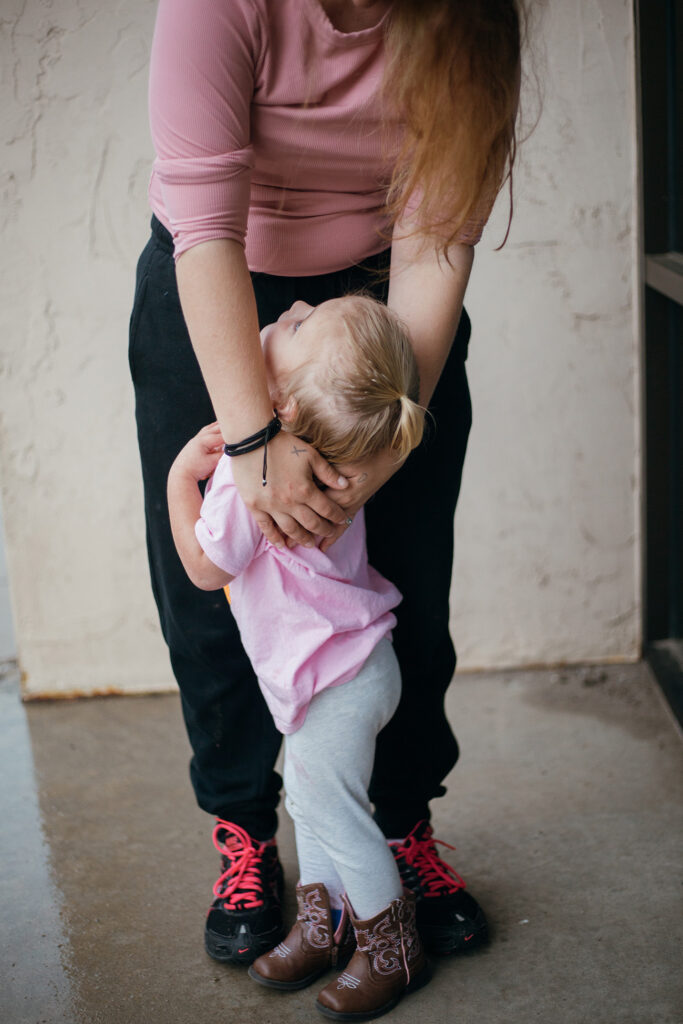

CHEYENNE’S STORY
Cheyenne T. and her husband are raising three kids in Hutchinson. Cheyenne works as a certified nursing assistant (CNA) while juggling school drop-offs and supporting her husband, who can’t work.
When the family moved back to Kansas in 2022, they immediately started receiving SNAP benefits. They relied on the program to get them through the month and put food on the table for their family of four. In March 2026, the family received notice that they would no longer receive SNAP, and DCF told them their paperwork hadn’t been submitted, even though Cheyenne had turned it in. Later, Cheyenne received notice that their family was no longer eligible for SNAP benefits because their income was $5 over the limit.
The $5 income difference meant the family lost hundreds of dollars in food assistance. Her family is struggling to understand why, instead of losing benefits completely, their amount wasn’t adjusted to offset the income increase. The church pantries and food banks help, but Cheyenne told me that she still relies on pay advances to pay the family’s bills and get the food they need to survive.
Families need practical support and stability, not just consequences when poverty creates hardship. During our interview, Cheyenne asked whether lawmakers worry about feeding their own families and whether they understand what it means for parents who work full time but still struggle to make ends meet. “Do they have to worry about what’s happening the next night?” she asked. “Do they have to worry about food on their table?”